Meta Automated Rules vs Boosterberg: When to Use Each

See when native tools are enough and what Boosterberg adds.

Boosterberg

Best for teams that repeatedly select and promote content across Facebook and Instagram pages.

vs
Meta native tools

Best for occasional manual boosts and rules that manage existing campaigns without a software subscription.

Boosterberg works alongside Meta: your ads still run through your own Meta advertising account. Meta's Boost Post button starts with a post you select manually, while Automated Rules apply conditions to existing ads and campaigns. Boosterberg adds a recurring workflow for selecting published Facebook and Instagram posts, creating ads when they qualify, and stopping promotion at your chosen thresholds.

For occasional boosting or existing-campaign management, Meta's native tools may be enough. Boosterberg fits teams that want to automate a continuing stream of content promotion.

Boosterberg vs Meta native tools at a glance

Boosterberg
Meta native tools
What it does
BoosterbergAuto-create ads from organic posts via rules
Meta native toolsManual boost one post at a time + manage existing campaigns
Subscription cost
Boosterberg$25/channel/month
Meta native toolsFree (only pay ad spend)
Auto-creates ads from new organic posts
BoosterbergCore feature
Meta native toolsManual one-by-one; rules only on existing campaigns
Watches new posts continuously
BoosterbergEvery 5 minutes
Meta native toolsManual trigger only
Per-post spend cap
BoosterbergYes
Meta native toolsCampaign-level budgets only
Best fit team
BoosterbergTeams publishing 3+ posts/week across pages
Meta native toolsCasual boosters or existing campaign managers

What Boosterberg adds to Meta's native tools

Meta Automated Rules are useful once an ad or campaign is running. For regular social publishers, there is another recurring task: choosing which organic posts should become ads. Boosterberg adds automation to that selection and creation step, with promotion controls your team configures. The ads continue to run through Meta.

Start promotion when a published post qualifies

The workflow for turning qualifying posts into Meta ads starts with the conditions you set for paid promotion. Boosterberg checks for matching Facebook and Instagram posts and creates ads through Meta's Marketing API using your campaign setup.

Combine signals such as engagement or link clicks with timing and keyword filters using AND/OR groups. That replaces a repeated manual decision with criteria your team can apply consistently across its publishing schedule.

Boosterberg checks organic posts every 5 minutes. The native Boost Post button starts with a post you select manually; Meta Automated Rules operate on existing advertising rather than continuously choosing new organic posts to promote.
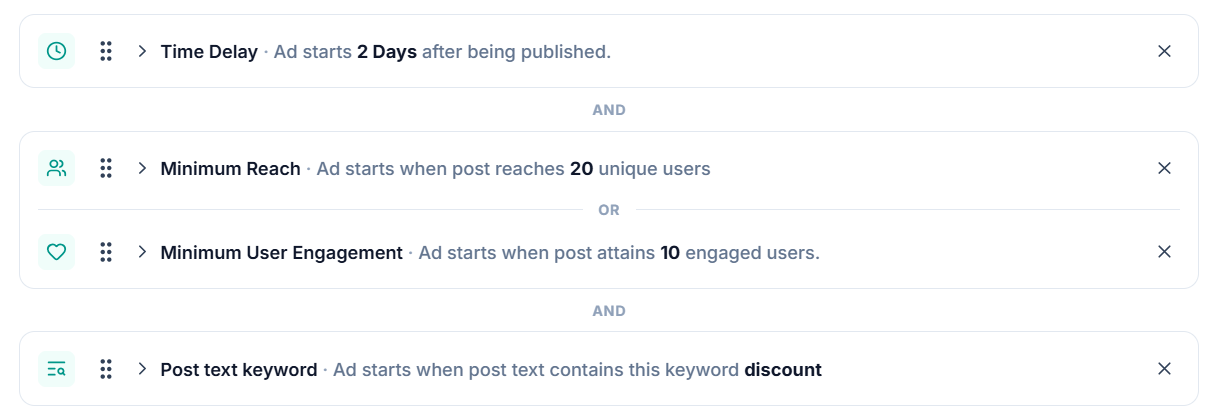

Boosterberg promotion rule combining reach, engagement, post age and a keyword
Select qualifying content before it becomes an ad.

Configure selection and stopping in one workflow

Deciding to launch a boost is only part of the job. Boosterberg includes individual post spend limits and performance-based stopping in the promotion setup. You can use CPC, cost-per-engagement or total-spend thresholds to define when each promoted post should stop.

Meta also offers budgets and rules for controlling existing ads. The practical difference is where you set up the work: Boosterberg connects qualifying organic content with its promotion and stopping criteria, while native Automated Rules manage advertising you have already created.

Boosterberg stop condition with a five-euro cost-per-link-click threshold
Boosterberg total ad spend threshold of twenty euros
Define the cost and spending thresholds for ending a post promotion.

Check previously published posts against your criteria

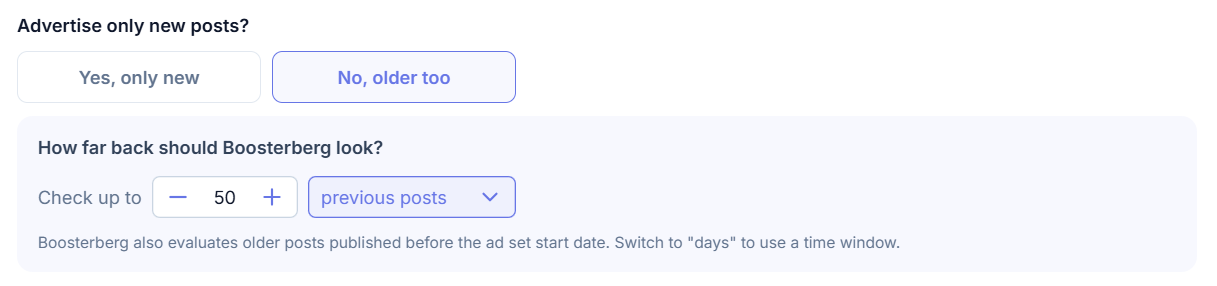
Past Post Check evaluates older content when you start a promotion workflow. Set a lookback and apply the same selection criteria to posts that were published before the rule was configured.

This is useful when connecting an existing page or starting a new content strategy. Instead of manually opening each older post, you can include that content in a defined checking process. Human PPC support can help you configure the conditions.

Boosterberg Past Post Check configured to include 50 older posts
Evaluate existing published content when you begin a new promotion workflow.

When Meta's native tools are enough

For occasional promotion, the Boost Post button may be all you need. Select a post, audience, budget and duration, and keep the workflow inside Meta. There is no separate software subscription to justify when the manual task is already manageable. Our guide to Boost Post versus Ads Manager explains when the manual workflows fit.

Meta Automated Rules are also a good fit for teams whose main requirement is monitoring existing campaign performance and triggering actions such as pausing delivery. If automatic selection of published content is not part of your workload, native rules can cover a different and valuable job.

Pricing: Boosterberg vs Meta native tools

Boosterberg

$25 per channel/month

  • $20.83 per channel/month billed annually
  • Post selection, spend controls and performance stops included
  • Past Post Check and human PPC support
  • 14-day free trial; no credit card required

Meta native tools

$0 software subscription

  • Boost Post and Automated Rules included in Meta
  • Advertising spend still applies
  • Manual post promotion or rules for existing ads

Use Boosterberg pricing to calculate the subscription for your channels. The decision is whether automating recurring post promotion is worth that cost for your team; both approaches still require an advertising budget paid to Meta.

Which one should you choose?

Add Boosterberg if...

  • Your team promotes published content regularly across pages or markets.
  • You want posts to become ads when they meet your criteria.
  • You need older-post checking and individual promotion limits.
  • Manual selection and launch create recurring work.

Use Meta native tools on their own if...

  • You boost posts occasionally and prefer to select them yourself.
  • Your rules mainly manage campaigns that are already running.
  • A separate software subscription does not suit your needs.
  • Manual audience, budget and duration choices are manageable.

Using both together

You can also use both. Keep native tools for occasional promotions and broader campaign management, and let Boosterberg handle a clearly defined recurring post-promotion workflow. Check overlapping rules before applying both to the same campaigns.

Boosterberg became a core automation layer in our marketing system. It allows us to systemize content distribution at scale and significantly reduce the manual workload.
Bill Hillestad
Bill Hillestad
Founder · AddTraffic

Frequently asked questions

What does Boosterberg add to Meta Automated Rules?

Meta Automated Rules act on ads, ad sets and campaigns that already exist. Boosterberg also checks published Facebook and Instagram posts and creates ads when the posts meet your selection criteria. It adds automation to the step before a post becomes an ad.

Is Boost Post enough for occasional promotion?

Yes. If you only promote a few posts and are comfortable selecting each one manually, the native Boost Post workflow may cover your needs. Boosterberg becomes useful when repeating that decision across posts and channels creates regular work.

Why pay a subscription when Meta Automated Rules are free?

The subscription covers a different workflow: ongoing post selection, automatic ad creation, individual post spend limits and Past Post Check. Compare the value of removing that repeated work with Boosterberg's $25 per channel monthly cost. Meta still bills the advertising spend.

Can I keep using Meta Automated Rules with Boosterberg?

Yes. Boosterberg creates campaigns in your Meta account, where native rules can also act on them. Review overlapping conditions and budget actions so that two sets of automation do not work against each other.

Where do the ads created by Boosterberg run?

They run through your own Meta advertising account and remain visible in Meta Ads Manager. Boosterberg supplies the promotion automation; Facebook and Instagram deliver the ads, and Meta charges your account for ad spend.

Start your 14-day free trial

See how your Facebook and Instagram posts can promote themselves.

No credit card · Cancel anytime · Real human PPC expert support